Engineering Medical Innovations: Inside Consonance
Engineering medical innovations gave us two million medical devices across more than 7,000 categories (WHO), yet the demand for safer, smarter, and more innovative solutions never stops growing. Digital health technologies are transforming the way healthcare works, making it safer, more accessible, and more efficient. But behind every breakthrough device is an engineering team turning ideas into reality. Without high-quality, affordable medical devices, building healthier communities, responding to health crises, or delivering basic care would simply be impossible, especially in regions where healthcare access is limited.
In this article, we’ll explore how an interdisciplinary engineering team powers medical innovation.
Engineering Medical Innovations Requires a Team
Creating a medical device is a collaborative effort that combines expertise from multiple fields. Mechanical, electronics, and embedded engineers work side by side with industrial designers, quality and regulatory specialists, and project managers. Each of these roles brings unique value: engineers ensure functionality and safety, designers focus on usability and form, while project managers coordinate the workflow and keep the entire process aligned. Together, they anticipate challenges, resolve conflicts, and integrate technical, regulatory, and user-centered requirements into a device that is not only reliable but also intuitive and pleasant to use.
Mechanical Engineers
Mechanical engineers are responsible for the design and appearance of the device. They start by designing the housing, which not only protects the electronics from moisture, dust, and damage but is also practical and tailored to the specific application. Based on the requirements, they plan the layout of components such as buttons and user interfaces. Mechanical engineers also select materials that are safe for patient contact and capable of withstanding sterilization processes when necessary.
Additionally, they conduct endurance tests and evaluate the mechanical strength of the device to ensure it performs reliably in everyday use. Mechanical engineers often work closely with industrial designers, who shape the device’s form and user experience, ensuring that the housing is not only functional but also ergonomic and visually appealing. The challenges they face include space constraints in miniaturization, integrating mechanical components with electronics and software, meeting strict medical safety standards, and designing ergonomics that remain comfortable despite an increasing number of features.

MedTech Electronics and Embedded Engineers at work
Electronics and Embedded Engineers
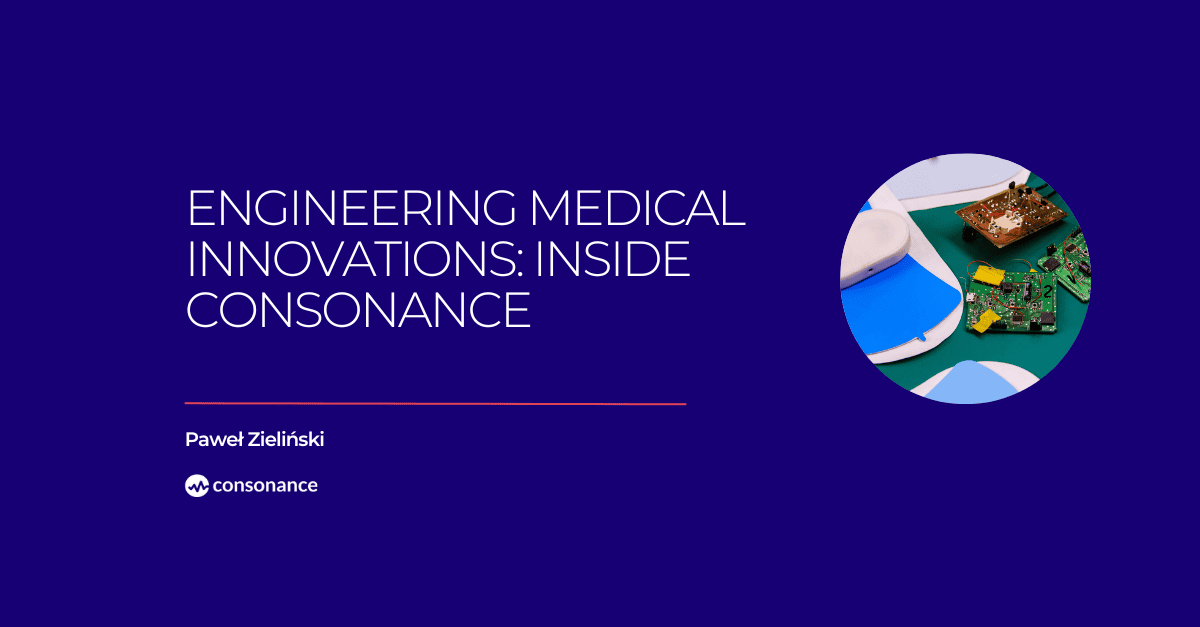
If mechanical engineers give a device its body, electronics engineers give it a mind. They are responsible for designing electronic circuits, schematics, and printed circuit boards (PCBs). Their work ensures that the right components are selected, not only for performance, but also for long-term availability. A single oversight in component lifecycle management could result in major issues years later, if a critical part is discontinued while the device is still in production. Electronics teams also handle PCB assembly, soldering, and prototype building, this is where much of the “magic” of turning a concept into a working device happens. The same team typically develops the embedded firmware that allows the hardware to perform its functions and interact seamlessly with users and other systems.
However, their role goes far beyond coding and circuit design. They must navigate complex regulations and standards such as IEC 60601 (medical electrical equipment) and ensure electromagnetic compatibility (EMC). Balancing cutting-edge technological solutions with cost-effectiveness is a constant challenge. Ultimately, electronics and embedded engineers act as the bridge between the physical device and the intelligent functions that bring it to life.
Quality Engineers and Regulatory Specialists
Quality engineers ensure that medical devices perform according to specifications and remain completely safe for patients. They achieve this through rigorous testing, validation, and quality control during both development and manufacturing. Their role also includes identifying potential risks and implementing corrective measures. At the organizational level, they are responsible for establishing and maintaining a robust Quality Management System (QMS).
Regulatory specialists, on the other hand, ensure compliance with legal requirements and harmonized standards in the regions where the product will be distributed. They design regulatory strategies, develop action plans, and coordinate activities that help bring products to market quickly and safely. Their responsibilities include conducting internal audits and, together with engineering teams, shaping quality policies to strengthen systems, reduce risks, and raise standards. A qualified regulatory specialist must stay current with evolving regulations and, most importantly, be able to interpret them and translate legal requirements into practical applications for the company.
Engineering Team at the Forefront of MedTech Innovation
Technological progress has not bypassed the MedTech industry. As devices become smaller and more complex, engineering teams face new challenges. Modern technologies open up enormous opportunities, but they also demand specialized knowledge, interdisciplinary collaboration, and strict adherence to standards.
One of the fastest-growing areas is augmented reality (AR) and virtual reality (VR). These technologies are increasingly used to train surgeons, enhance their skills, and even support them during operations by overlaying digital information, such as three-dimensional reconstructions of a patient’s anatomy directly onto their field of vision. Beyond the operating room, AR and VR are also applied in therapy, for example in the treatment of post-traumatic stress disorder, anxiety, and phobias.
Another major innovation is the Internet of Medical Things (IoMT), a network of devices, sensors, and systems that enable remote patient monitoring and secure data exchange with healthcare providers. Wearable devices can continuously track vital signs, making it possible to detect health issues earlier. At the same time, the growth of IoMT raises concerns around privacy, data security, and regulatory compliance.Complementing this trend is cloud computing, which enables patient data to be collected and accessed across different locations. While the cloud improves flexibility and scalability, it also introduces questions about data protection and legal requirements.
Finally, medical software is undergoing its own transformation. Machine learning is increasingly being applied in diagnostics, from analyzing CT scans with remarkable accuracy to personalizing treatment plans based on genetic data, medical history, and lifestyle factors. Yet, alongside these promising applications come ethical concerns, such as patient privacy, algorithm interpretability, and decision-making transparency.

Engineering Team at the Forefront of MedTech Innovation
Final Thoughts
With the world’s population growing and aging, healthcare systems face the challenge of delivering high-quality solutions with limited resources. This creates tremendous opportunities for interdisciplinary teams of doctors, engineers, and regulatory specialists, who can collaborate to address unmet medical needs or staff shortages. Engineers are the driving force behind technology – without them, no medical device could come to life. That is why working with the right team is crucial, one that not only builds the device but does so in full compliance with applicable standards and in a way that ensures smooth certification. At Consonance, we understand that assembling an effective team capable of implementing innovations takes years of experience. That is why partnering with a technology provider who has deep industry knowledge and operates with confidence, without “feeling their way in the dark”, can make all the difference.
Have questions? Get in touch with us – we are happy to share our expertise and demonstrate how we can collaborate to bring innovative medical devices to market.
Source:
https://iris.who.int/bitstream/handle/10665/344249/9789240020924-eng.pdf?sequence=1
https://www.who.int/health-topics/digital-health
https://www.who.int/health-topics/medical-devices#tab=tab_1
https://www.cureus.com/articles/230344-transformative-frontiers-a-comprehensive-review-of-emerging-technologies-in-modern-healthcare#!/
https://journals.plos.org/plosone/article?id=10.1371/journal.pone.0307959